
Is Tempeh Halal? What to Check Before You Buy
Is Tempeh Halal? What to Check Before You Buy
Soybeans, a starter culture and a day or two of fermentation. Tempeh sounds about as simple as food gets, so why do so many people still ask “is tempeh halal?” The short answer is that tempeh starts with halal-friendly ingredients, but a packaged tempeh product is only as halal as everything that happens to it after the beans. Here’s what to look for, and how to check it yourself in under a minute.
Is tempeh halal? The short answer
Plain tempeh is made from soybeans and a tempeh starter culture, a mould called Rhizopus. The culture binds the beans into a firm, nutty cake. The basic recipe has no animal ingredients.
But “made from soybeans” is not the same as “halal certified”. Tempeh chips, marinated tempeh and other packaged tempeh go through more steps: seasoning, frying, packing, storage. Each of those steps is where halal status is won or lost.
What makes tempeh halal-sensitive
When you’re deciding whether a tempeh product is halal, these are the points that matter:
- The starter culture: what it’s made from and what it’s grown on.
- The frying oil and equipment: whether fryers or production lines are shared with non-halal products.
- Seasonings and flavourings: some flavourings and additives can contain animal-derived or alcohol-based ingredients.
- Handling, storage and transport: where cross-contamination can happen after production.
Fermentation often comes up too. It’s one of the things halal certification assesses along with the rest of the process. For a packaged product, a valid halal certificate settles it; guesswork doesn’t.
What JAKIM halal certification actually means
JAKIM (Jabatan Kemajuan Islam Malaysia) is the federal body responsible for halal certification in Malaysia. Certification isn’t a one-time sticker. JAKIM checks ingredients and their suppliers, processing, premises and hygiene, and audits the manufacturer. Certificates are valid for a set period and must be renewed. Manufacturers have to report changes to certified products.
So when you see the Malaysian halal logo on a pack, it means the whole chain behind that product has been checked, not only the recipe.
How to check a halal logo in 3 steps
- Look for the official Malaysian halal logo. The word “halal” or Arabic script printed on a pack is not the same as certification. Look for the official logo.
- Check imported products carefully. Imported food may carry a halal logo from a certification body in another country. JAKIM recognises certain foreign halal bodies, so check that the logo comes from one of them.
- Verify it. Use JAKIM’s halal status check on its official portal. Certificates expire, so make sure the status is current.
How we make our halal tempeh chips
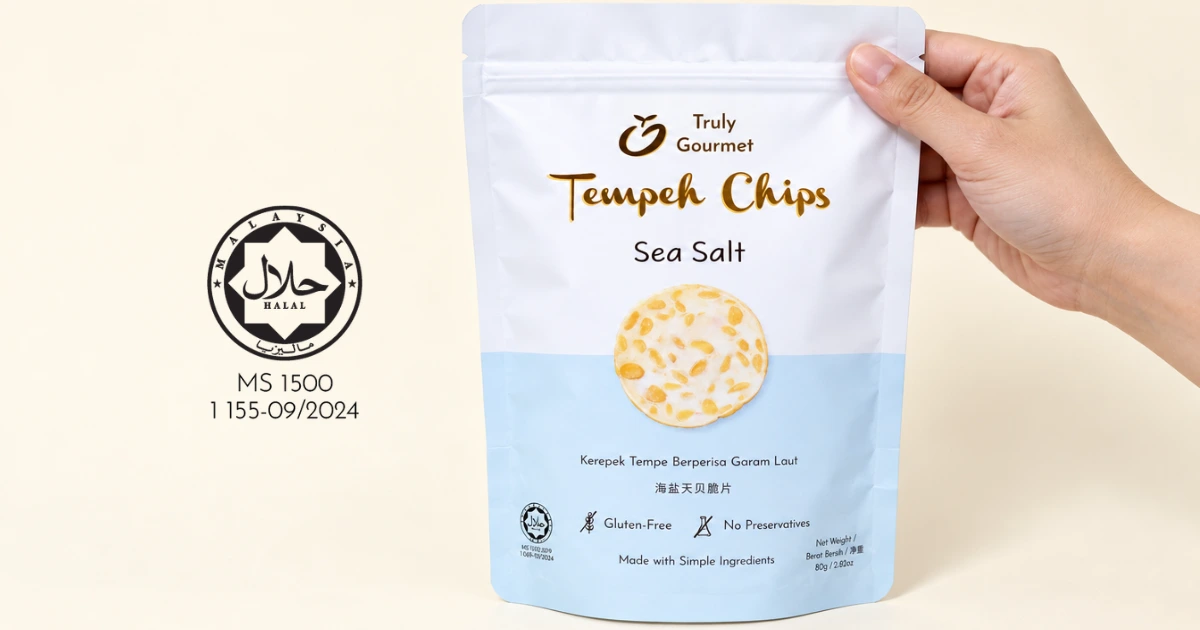
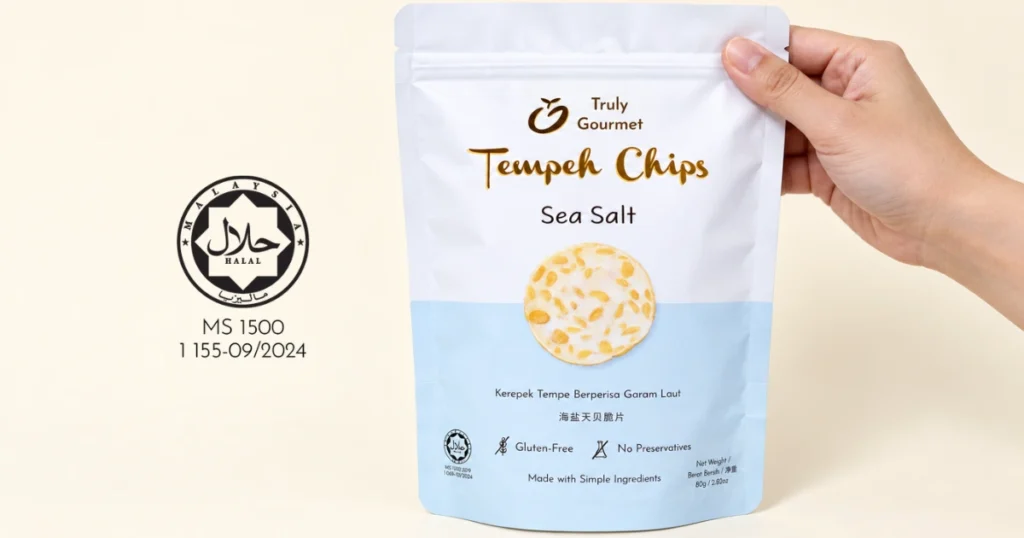
Our tempeh chips are Halal certified by JAKIM. We make them in our own facility in Kajang, Selangor. They’re vegan, with no animal ingredients, and made with real ingredients.
Our facility holds food safety certifications as well as Halal. Manufactured in a FSSC:22000 FSMS certified facility. HACCP certified facility.
You can see all our certifications on Our Standards, and read more about our Halal certification in Halal Tempeh Chips by Truly Gourmet.
Our tempeh chips are made by our manufacturing company, LE Industries. You can check our Halal certification yourself in JAKIM’s official halal directory, where each flavour is listed with its certificate expiry date.
FAQs
Is all tempeh halal?
The basic ingredients are plant-based, but a product’s halal status depends on its ingredients and how it’s processed. For packaged tempeh, look for a valid halal certificate.
Is fermented food halal?
Fermentation is one of the things halal certification bodies assess. For a packaged product, a valid halal certificate is the practical way to be sure.
Are Truly Gourmet tempeh chips halal?
Yes, they’re Halal certified by JAKIM.
Where can I buy them?
Online, at stores across Malaysia, or in Singapore.
Now that you know what to check, explore our 8 flavours.