Plant-Based Chips in Malaysia: What’s Actually in the Crisps Aisle?
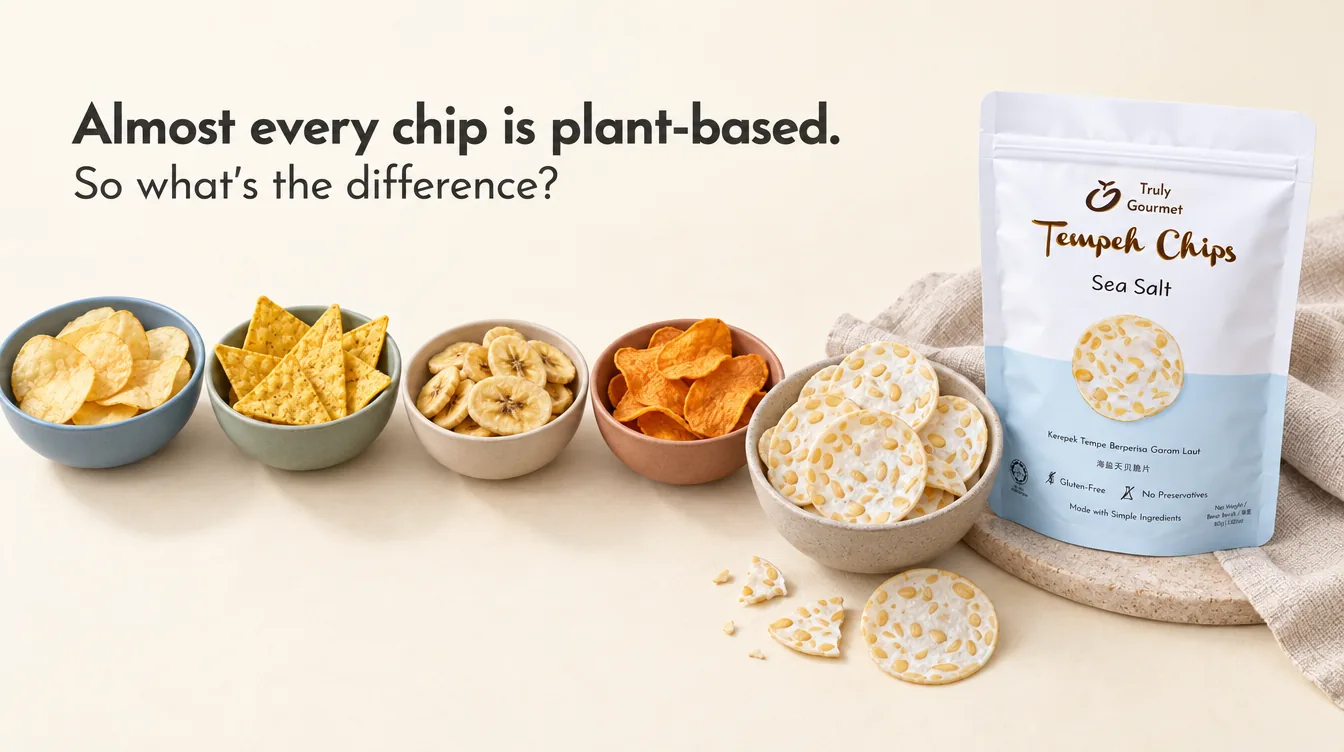
Here’s a fact that surprises most people: nearly every chip in a Malaysian supermarket is already plant-based. Potato, corn, cassava, banana, sweet potato, soybean: all plants. So “plant-based chips” on its own doesn’t tell you much. What really changes a snack is what the plant is and how it’s turned into a chip. That decides how much protein, fibre and fat you get in every handful.
This guide walks through the main types of chips you’ll find in Malaysia, compares them per 100 g, and shows you how to read a pack in under a minute.
Are most chips plant-based?
Yes. A plain potato chip is potato, oil and salt. Corn chips are corn. Keropok ubi is cassava. They’re all plants. The exceptions are mostly snacks with animal ingredients added: prawn crackers, fish crackers, and some flavourings that use milk powder, cheese or meat-based seasoning.
So if you’re looking for vegan or vegetarian chips, the base ingredient is rarely the problem. Check the seasoning. Look at the ingredient list for milk, cheese, whey, egg, fish, prawn or anchovy, and look for a clear vegan or vegetarian statement on the pack.
The main types of chips in Malaysia, compared
The base ingredient is what shapes the nutrition. Most crisps are made from starchy foods (potato, corn, cassava, fruit), which are mostly carbohydrate. A few are made from legumes like soybeans, chickpeas or peas, which naturally carry more protein. Here’s how typical products compare, per 100 g:
| Chip type (per 100 g) | Protein | Dietary fibre | Fat |
|---|---|---|---|
| Truly Gourmet tempeh chips (fermented soybean) | 12.4–14.5 g | 7.2–9.4 g | 21.8–27.3 g |
| Tortilla / corn chips | 6.6 g | 4.7 g | 22.3 g |
| Potato chips | 6.4 g | 3.1 g | 34.0 g |
| Puffed corn snacks | 5.5 g | 0.8 g | 36.5 g |
| Stacked potato crisps | 4.6 g | 2.9 g | 35.3 g |
| Sweet potato chips | 2.9 g | 8.8 g | 32.4 g |
| Banana chips | 2.3 g | 7.7 g | 33.6 g |
| Prawn crackers (not plant-based) | about 2 g | about 1.7 g | about 27 g |
Reference values for typical products: USDA FoodData Central (potato chips, stacked potato crisps, tortilla chips, puffed corn snacks, banana chips, sweet potato chips) and a typical retail pack label (prawn crackers). Truly Gourmet values are the range across our eight flavours, from our nutrition information panels. Individual brands vary, so always check the pack.
Three things stand out:
- Protein follows the plant. Starch-based chips sit at about 2–7 g of protein per 100 g. Soybean-based tempeh chips sit at about twice that, because soybeans are a legume.
- Fibre isn’t only about legumes. Sweet potato and banana chips do well on fibre, but they’re low in protein.
- Fat depends on how the chip is made, not just what it’s made from. Puffed and stacked snacks can carry more fat than you’d expect.
Starch-based chips: potato, corn, cassava and fruit
These are the classics, and the bulk of the crisps aisle. Potato chips, corn chips, keropok ubi (cassava), banana chips and sweet potato chips are all made from starchy plants. They’re great for crunch, but they’re mainly a carbohydrate snack, with protein in the low single digits per 100 g.
“Vegetable chips” made from beetroot, carrot or kale often sit in this group too. They can add colour and some fibre, but don’t assume “vegetable” means high protein. Read the panel.
Legume-based chips: soybean, chickpea and pea
This is where protein chips in Malaysia mostly come from. Legumes such as soybeans, chickpeas and peas are naturally richer in protein than potato or corn. You’ll see them as tempeh chips, chickpea puffs, pea crisps and imported “protein chips”.
Two things to watch with this group:
- Whole food or isolate? Some imported protein chips are made from protein isolate (protein extracted from peas, soy or milk). Others, like tempeh chips, are made from the whole bean. Both are legitimate; they’re just different foods. The ingredient list tells you which you’re getting.
- Not every “protein” chip is plant-based. Some use milk or whey protein. Check if you’re vegan.
Where tempeh chips fit
Tempeh chips are made from soybeans fermented into tempeh, then sliced thin and fried until crisp. Because they start from whole soybeans, they land at the top of the protein column above: our eight flavours range from 12.4 to 14.5 g of protein per 100 g, with 7.2 to 9.4 g of dietary fibre. See the full numbers for every flavour in Tempeh Chips Calories and Nutrition, Flavour by Flavour.
One honest note, because you’ll see it claimed online: tempeh chips are a fried snack. Fermentation shapes the flavour and texture of tempeh, but frying heat means you shouldn’t count on live cultures in any fried chip, tempeh included. Enjoy them for the taste and the crunch.
Our tempeh chips are:
- High in protein
- A good source of fibre
- Vegan and gluten-free
- Cholesterol-free and trans fat-free
- Halal certified by JAKIM
How to compare chips on the pack in under a minute
- Use the “per 100 g” column, not “per serving”. Serving sizes vary between brands, so per 100 g is the only fair comparison.
- Check protein, fibre and fat together. One good number doesn’t tell the whole story.
- Read the first ingredient. It’s the main one. Potato, corn, cassava, soybean or chickpea tells you which group the chip belongs to.
- Scan for animal ingredients if you eat vegan or vegetarian: milk, cheese, whey, egg, fish, prawn, anchovy.
- Look for the halal logo if that matters to you. We explain what to check in Is Tempeh Halal? What to Check Before You Buy.
FAQs
What are plant-based chips?
Chips made entirely from plant ingredients, with no animal-derived ingredients in the base or the seasoning. Most potato, corn and cassava chips are plant-based; the seasoning is what usually decides it.
Which chips are highest in protein?
Chips made from legumes, such as soybean-based tempeh chips, chickpea and pea crisps, or chips made with added protein isolate. Starch-based chips are usually much lower.
Are tempeh chips vegan?
Ours are. They’re made from soybeans and contain no animal ingredients. For other brands, check the seasoning on the ingredient list.
Are tempeh chips gluten-free?
Ours are gluten-free. Check the label of any other brand, because tempeh chips can be made with different flours.
Are tempeh chips fried or baked?
Ours are fried. Most tempeh chips are.
Where can I buy tempeh chips in Malaysia?
Online or at stores across Malaysia.
Curious how a soybean chip tastes next to the potato kind? Explore our 8 flavours.